
Established in 2010 · Food Packaging Manufacturing in China · Export packaging support
Custom Plastic Food Packaging Manufacturer
Source food containers, trays and clamshells for takeaway meals, fresh food, bakery products and ready meals. JH Packaging offers PP, PET and CPET packaging, with standard formats and custom options for bulk orders.
Tell us what you pack, the size you need and your order quantity. We will help you narrow down the material and container format for your project.
JH packaging PLASTIC FOOD CONTAINER MANUFACTURER
Custom Product Categories

Fruit & Vegetable container
Restaurant meal container


cake display container

Supermarket show containers
Take out container


biodegradable food containers
Material Options
PP, PET, CPET, PS and PLA Food Packaging Options
The right packaging material depends on your food type, serving temperature, shelf display, sealing method, sustainability goals and target market requirements. JH Packaging manufactures food packaging in PP, PET, CPET, PS and PLA, helping food brands, supermarkets, restaurants and packaging distributors choose the most suitable material for each application.
Whether you need microwaveable meal containers, clear fruit clamshells, bakery boxes, ready meal trays or plant-based packaging options, our team can recommend the right material, structure and customization plan based on your product and purchasing requirements.
PP Food Containers
Hot Meals and Takeaway Packaging
PP, also known as polypropylene, is widely used for takeaway meals, hot food containers, deli packaging and compartment trays.
- Takeaway food containers
- Microwaveable meal boxes
- Soup and deli containers
- Compartment trays
- Food service packaging
PET Food Packaging
High Clarity for Display Packaging
PET, also known as polyethylene terephthalate, is selected when product visibility and shelf presentation are important.
- Fruit clamshells
- Salad containers
- Bakery boxes
- Cake and dessert packaging
- Supermarket display trays
- Cold food packaging
CPET Ready Meal Trays
Designed for Frozen, Sealed and Reheating
CPET, or crystallized PET, is used for ready meal tray projects that require freezing, sealing and reheating performance.
- Ready meal trays
- Frozen meal packaging
- Airline meal trays
- Meal prep trays
- Heat-sealable food trays
- Retail prepared food packaging
PS Food Packaging
Light-Duty Food Display Packaging
PS, also known as polystyrene, is an economical material option for light-duty food packaging, dry food trays, bakery inserts, confectionery packaging and display containers.
- Bakery inserts
- Dessert trays
- Confectionery packaging
- Dry snack trays
- Lightweight display containers
- Non-heated food packaging
PLA Food Packaging
Plant-Based Option for Fresh Produce
PLA, or polylactic acid, is a plant-based plastic option for brands looking for compostable packaging alternatives for cold food and fresh produce applications.
- Cold food containers
- Salad packaging
- Fresh produce clamshells
- Fruit packaging
- Eco-focused food packaging lines
- Chilled display packaging
plastic food containers manufacturer
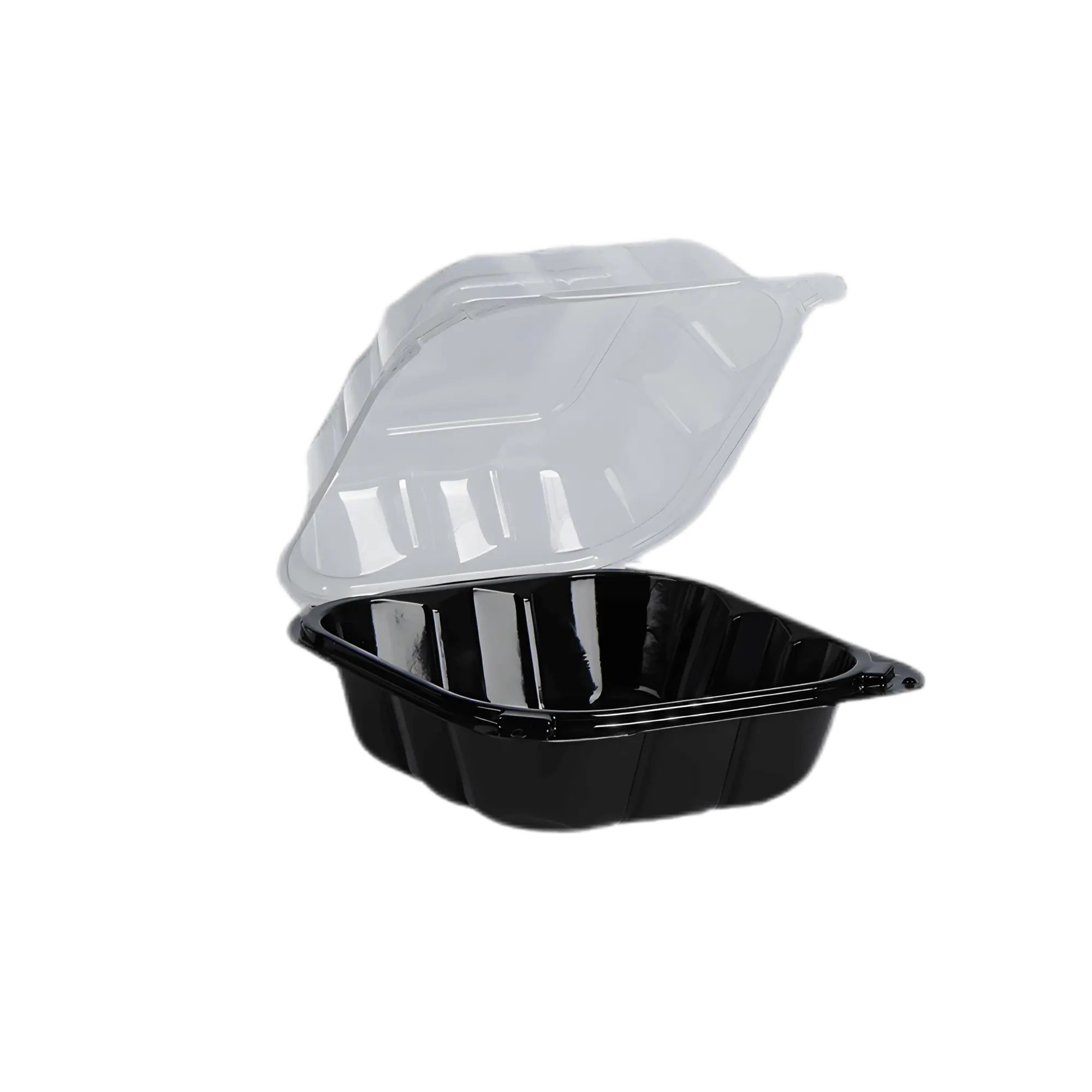
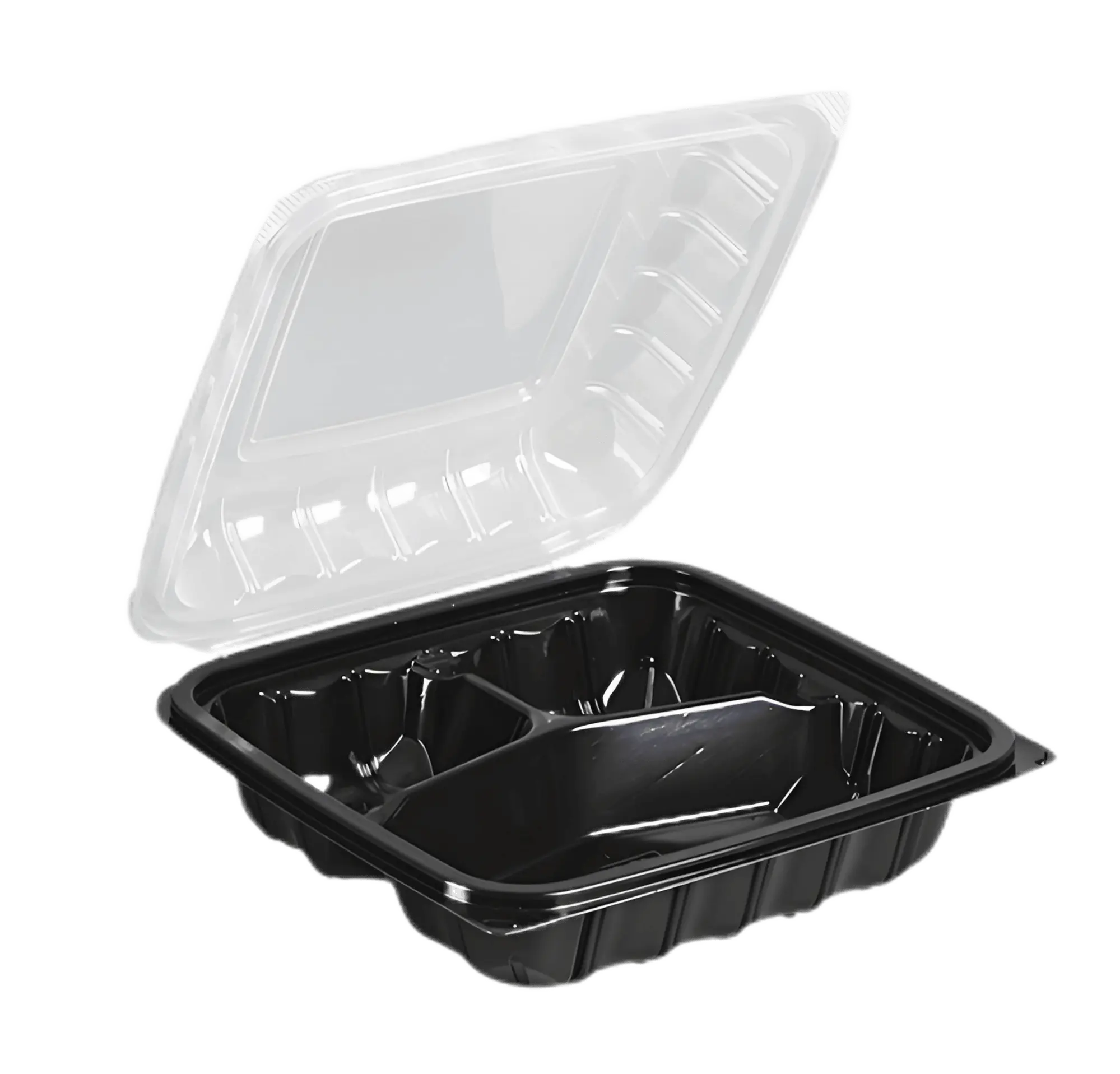
JH Packaging operates one manufacturing base in Hubei, China, covering approximately 5,000 m² and employing around 150 people. Our equipment includes three thermoforming lines, two injection molding lines, two sheet extrusion lines and two printing machines. For standard 9″ × 6″ dual-color PP hinged containers, our output capacity reaches up to 100,000 pieces per day under three-shift operation.
Food grade materials
Made of FDA/LFGB certified PP and PET materials, it eliminates BPA hazards and protects the safety of global dining tables.
Industry Experience
20 years of experience, implementation of ISO 9001 quality management system, use of precision mold technology to control 0.01 mm error.
Green Factory
The goal for 2025 is to achieve 50% production capacity using biodegradable materials, leading the low-carbon revolution in food packaging.
Exclusive design
Provide design drawings within 72 hours, support logo printing, color customization, and industry-specific design.
Service Commitment
Seamless connection from design to logistics, global door-to-door transportation, 7 days response to your urgent order needs
Sustainable Action
Use 30% recycled plastic to make containers and achieve the factory’s goal of zero plastic landfill by 2030.
JHPKG PLASTIC FOOD CONTAINERS MANUFACTURE For global service
JHPKG custom plastic food CONTAINERS manufacturer
workers
pcs/m
sqft
new products/m
PLASTIC FOOD CONTAINERS MANUFACTURER
XIANTAO JUNHUI PLASTIC PRODUCTS CO., LTD.
Disposable Food Packaging Manufacturer | Xiantao, Hubei, China
Since 2010, JHPKG has been manufacturing disposable food packaging for export customers. We run a 5,000 m² owned production facility with 150 employees, with thermoforming, injection molding, sheet extrusion and printing handled at the same site.
Our setup is designed around one simple goal: keep more of the production process under our own control, so customers have fewer suppliers, fewer handoffs and fewer surprises.
Production Capacity
For our 9″ × 6″ dual-color PP hinged container, production capacity can reach approximately 200,000 pieces per day under a three-shift, 24-hour production schedule.
Actual capacity varies by product design, material, tooling and production requirements. Production planning is arranged according to confirmed specifications and approved samples.
Quality Management
Our quality management system is certified to ISO 9001:2015.
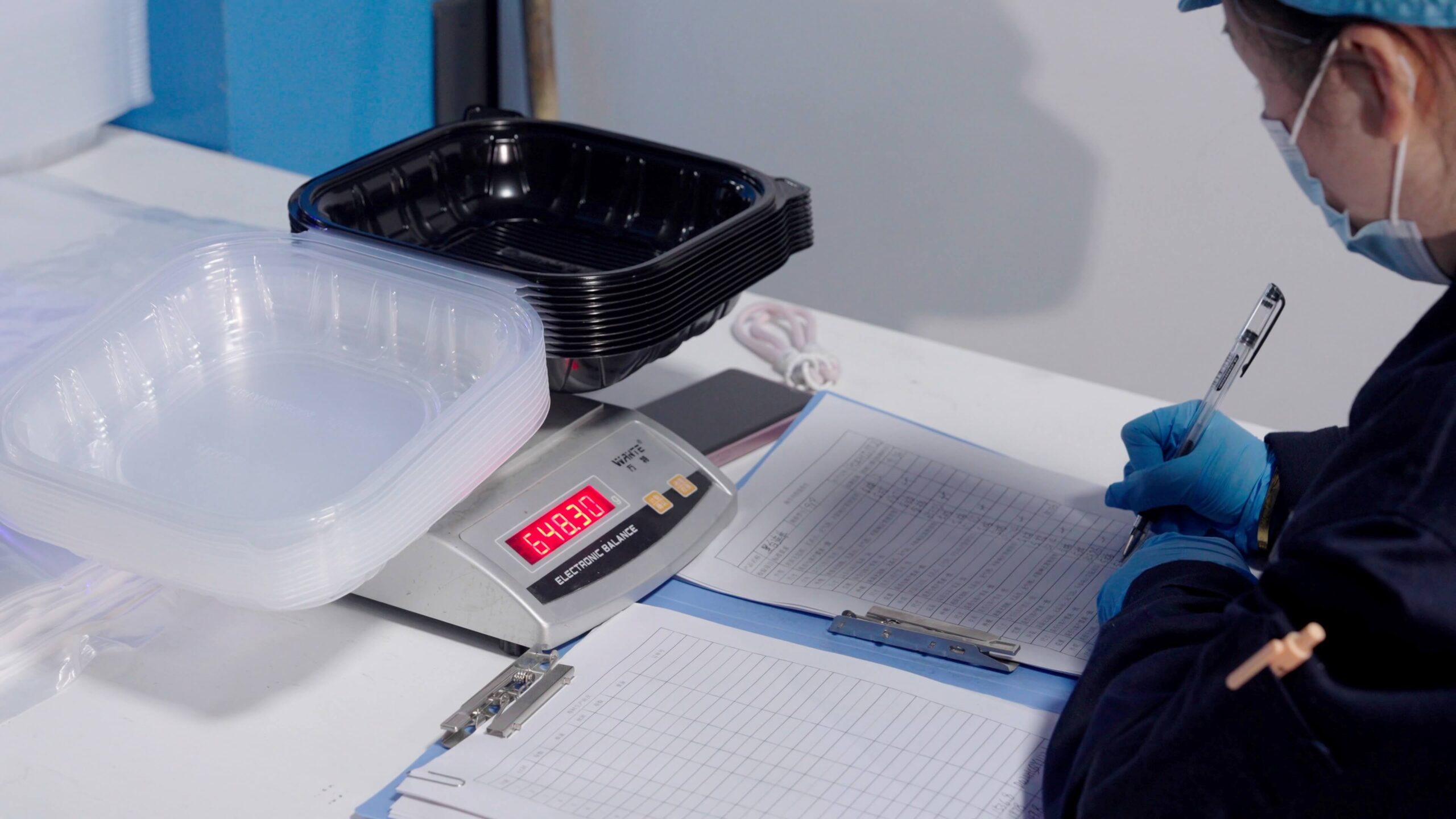
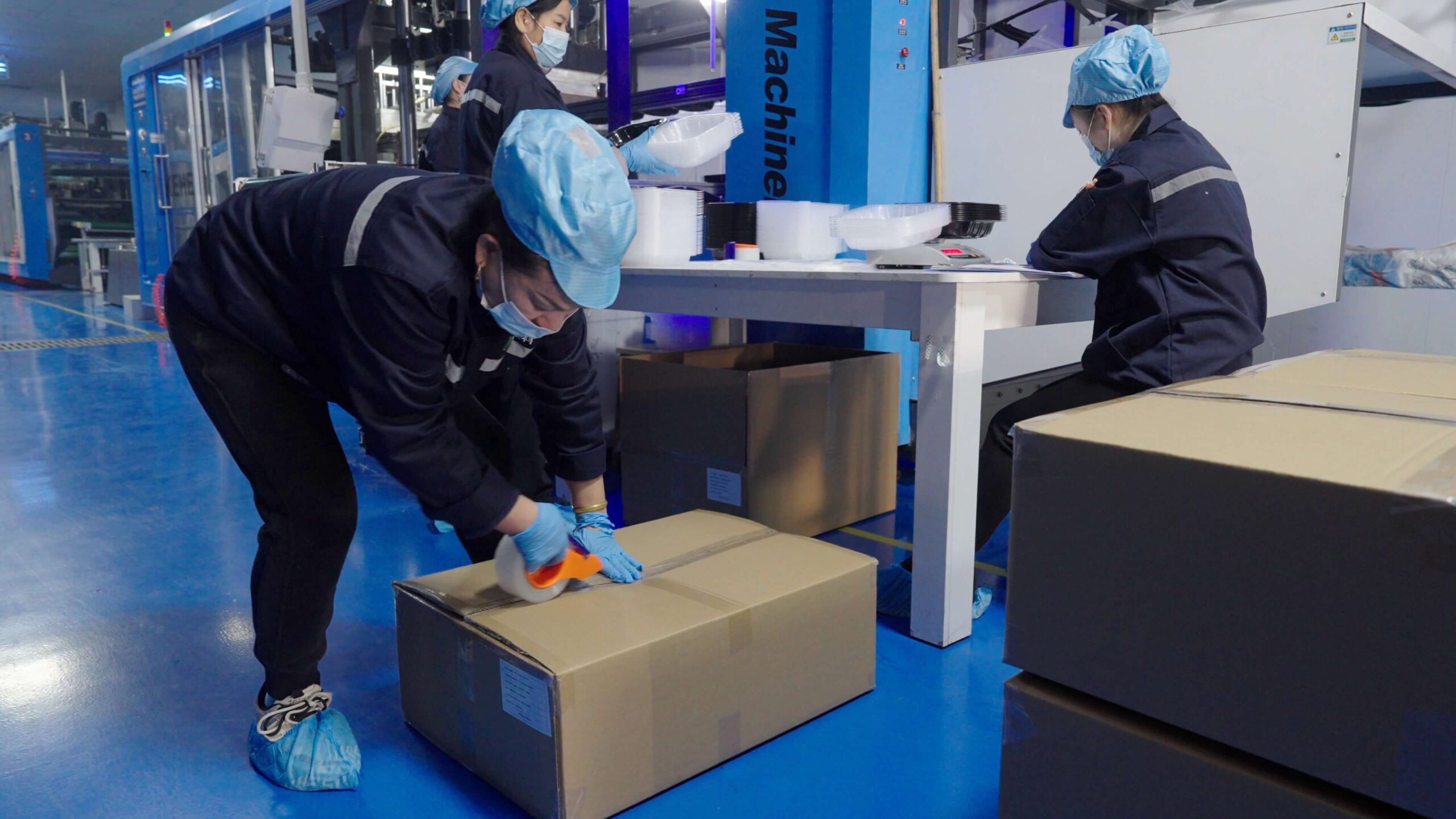
The production area is enclosed and access-controlled, with quality checks carried out throughout the manufacturing process. For food-contact packaging orders, we provide the relevant food-contact material compliance documentation according to the product, material and destination-market requirements.
We also accommodate third-party inspections and customer factory audits, with annual third-party or customer on-site audits conducted as part of our export business.
Integrated Production Capabilities
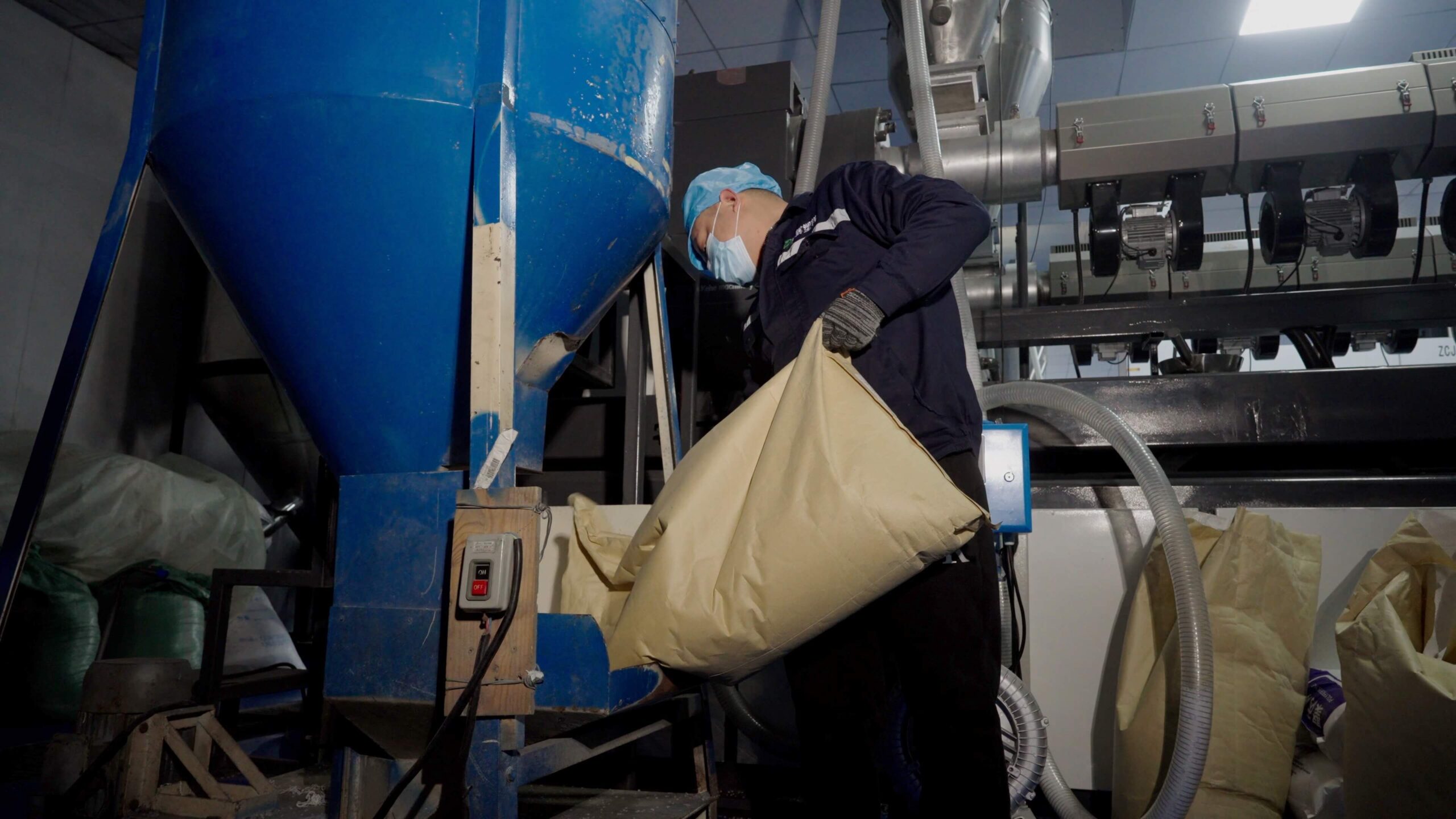
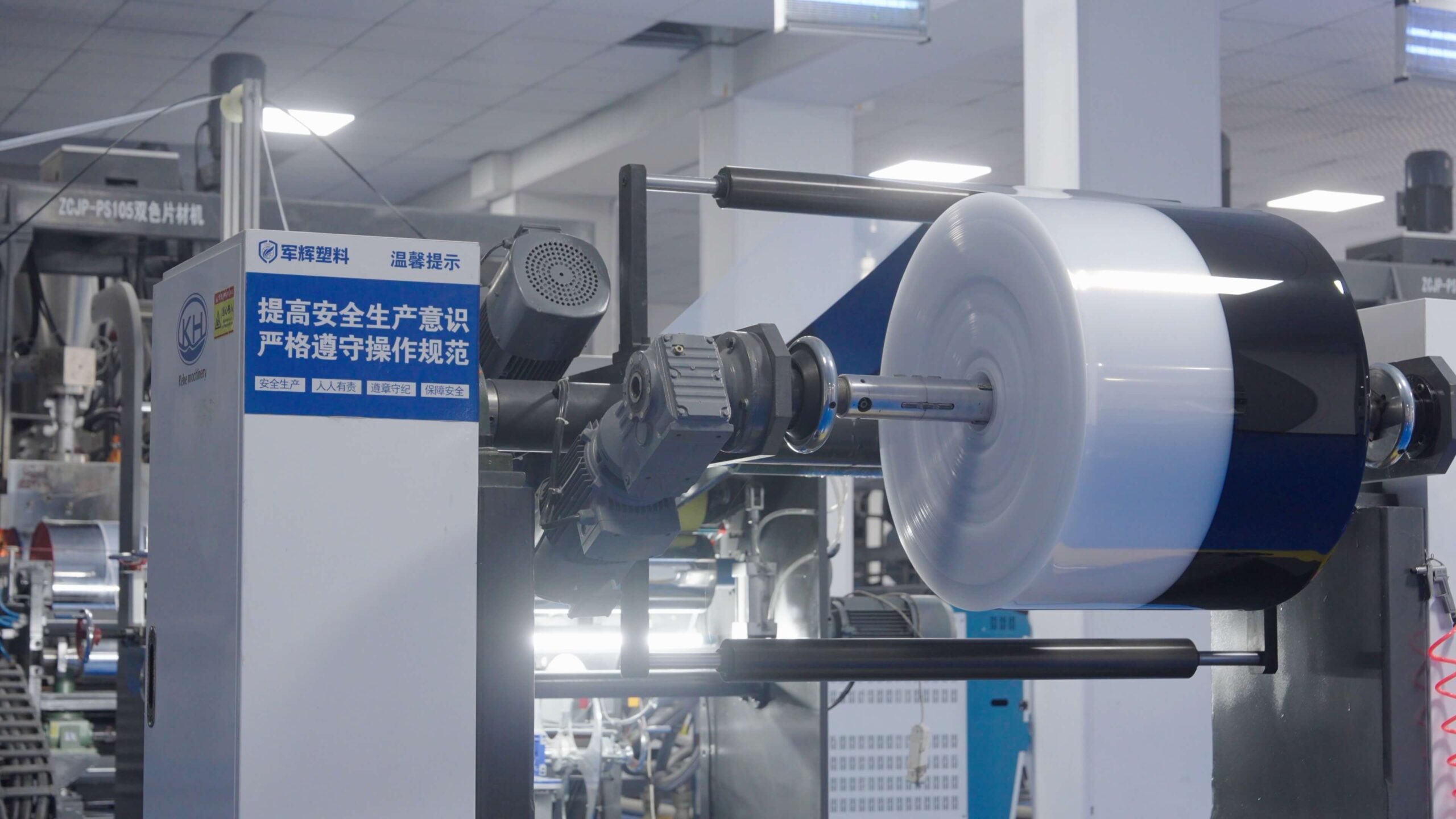
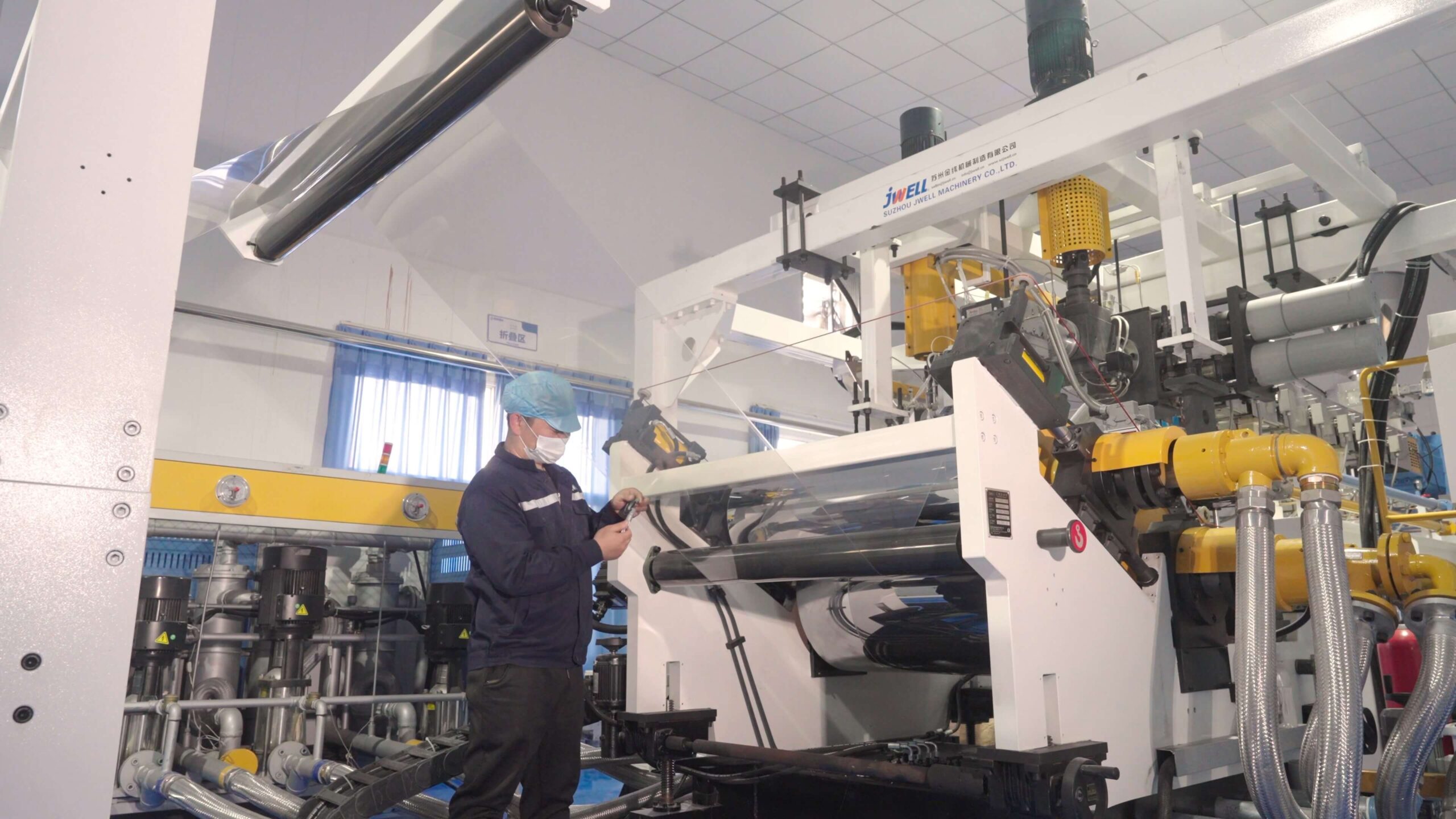
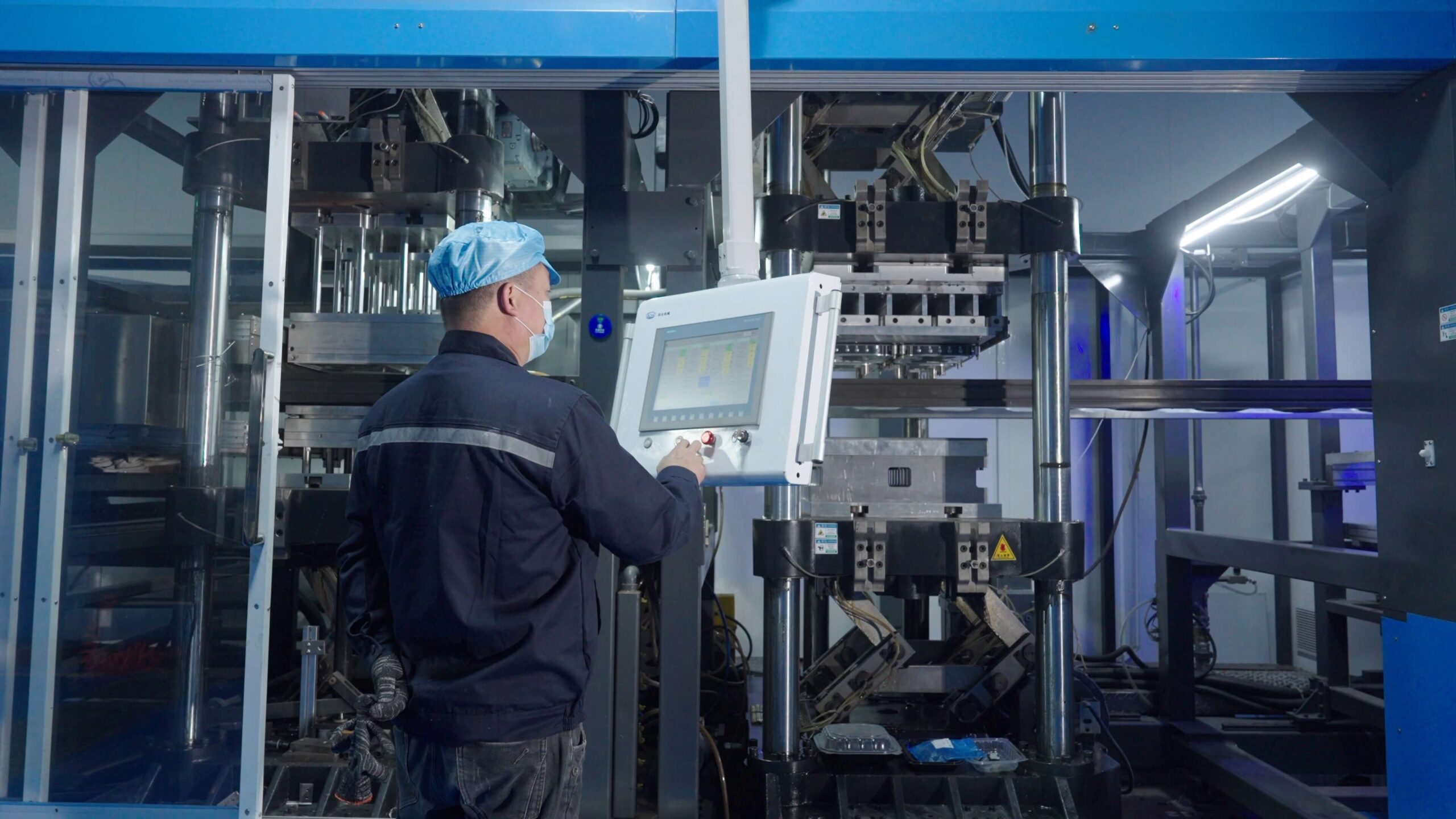
Our factory operates five production lines, including three thermoforming lines and two injection molding lines. We also operate two in-house sheet extrusion lines, allowing us to produce the plastic sheet required for our thermoformed products rather than relying entirely on external sheet suppliers.
For selected products, this creates a straightforward production chain:
Raw Material → Sheet Extrusion → Thermoforming → Printing → Inspection → Packing
Our production range includes PP hinged containers, dual-color PP containers, food trays, cups, bowls and other disposable food packaging products. Production is organized according to product specifications, material requirements and order quantities.
Standard Products and Custom Tooling
We maintain approximately 40 molds in stock covering commonly requested hinged containers, trays, cups and bowls. These existing molds allow customers to start projects without new tooling investment and shorten the time required to move into sampling and production.
For new product designs, we provide custom mold development with a typical tooling lead time of approximately 2 weeks, depending on product structure and project requirements.
Our standard production model supports both stock-mold orders and customized projects, making it suitable for distributors, foodservice suppliers, packaging wholesalers and brand owners with different purchasing volumes.
Safety Standards
Every container we produce is manufactured using FDA/LFGB certified materials, completely free from BPA and other harmful chemicals. 99.7% quality approval rate—significantly higher than the 92% industry average for plastic food containers.
Custom Capabilities
Our design team delivers preliminary mockups within 72 hours of initia .Custom shapes,color matching using Pantone color system. High-definition logo printing and surface treatments…reducing development cycles by up to 40%.
Research and Innovation
We dedicate 12% of annual revenue to R&D initiatives. has developed 17 technologies in the past decade.earned us 8 industry awards and resulted in 12 patents, positioning JH Packaging as the technical leader in food-grade plastic food containers solutions.
Customer Service
long-term partnerships via dedicated account managers and technical experts. offers 24/7 support, product development guidance, quality updates, supply chain optimization, and annual reviews. With 92% client retention over five years.
why choose us
Cost saving
Loading lift
The original 40HQ container can only load 150,000 lunch boxes, but Junhui’s products can load about 210,000 lunch boxes under the same container size (9 “x6” two-color hinge type). This significant increase means higher utilization per container, reducing the number of trips and associated costs.
Flexible Production
Whether you need 10,000 or 1,000 pieces, our advanced production infrastructure can meet orders of all sizes without the minimum order quantity set by competitors. This scalability can reduce inventory costs for customers by 15-20%, while ensuring on-time delivery, perfectly aligned with your production schedule.
Energy-Efficient Production
Our 2023 factory modernization plan uses energy-efficient equipment that consumes 37% less electricity than traditional machinery, significantly reducing production costs. These savings are not only reflected in our operations – our lightweight packaging design can reduce your transportation costs by an average of 12%, which can achieve cumulative cost savings throughout the supply chain.
Strategic Materials
JHPKG’s materials engineering team analyzes your specific application needs and recommends the most cost-effective material combination while ensuring product performance. This consultative approach has helped clients reduce material costs by an average of 18.5% while maintaining or improving packaging functionality, durability and shelf appeal.
Product advantage
Leading Materials
JHPKG’s plastic food containers solutions feature premium polymers that consistently outperform industry standards. Test data confirms 40% higher puncture resistance and 35% higher tensile strength than conventional materials. These performance indicators ensure your products are always protected throughout the distribution chain, significantly reducing losses due to damage.
Precision Engineering
JHPKG’s advanced manufacturing processes maintain dimensional tolerances within ±0.05mm, twice the industry standard. Superior precision ensures consistent sealing, stacking and handling performance at any scale of production, with up to 99.8% compatibility with automated filling and packaging systems.
Clear Display
JHPKG’s proprietary polymer formulation and processing technology enable clear packaging to achieve 92% light transmittance, well above the industry average of 85%. Superior clarity enhances product visibility and shelf appeal. Market research shows that products using our premium display packaging experience a 27% increase in consumer engagement.
Innovative Barrier Properties
Independent laboratory testing confirms that our advanced barrier packaging reduces oxygen transmission by up to 68% and water vapor transmission by 42% compared to standard packaging. These superior barrier properties extend the shelf life of fresh food by an average of 3-5 days, reducing waste and expanding distribution possibilities.
Quality service
Professional Management
Each client collaboration begins with a dedicated project team assigned by us, led by a senior manager with an average of more than 12 years of packaging development experience. This personalized approach results in a 98.7% on-time project completion rate and reduces development cycles by an average of 6.5 weeks compared to the industry average.
Rapid Prototyping
With in-house design and prototyping capabilities, JHPKG can deliver functional samples within 7-10 business days, 60% faster than the industry average. This rapid development process helps customers get products to market up to 5 weeks earlier than planned, providing a critical competitive advantage in the fast-moving consumer goods market.
Quality Assurance
JHPKG’s multi-level quality control system includes automated inspection technology that tests all production units on 27 different quality parameters, far exceeding the industry standard of random batch sampling. This rigorous approach achieves an excellent defect rate of less than 0.03%, which means virtually defect-free shipments.
Supply Chain Management
JHPKG’s advanced inventory management system has strategic material reserves, allowing us to respond to urgent orders with a standard product turnaround time of 72 hours, 50% faster than the industry average. For regular customers, this rapid response capability avoids production line downtime worth hundreds of thousands of dollars during demand surges or supply chain disruptions.
Invention patents
orders
Country of sale
Year long warranty
what customers say
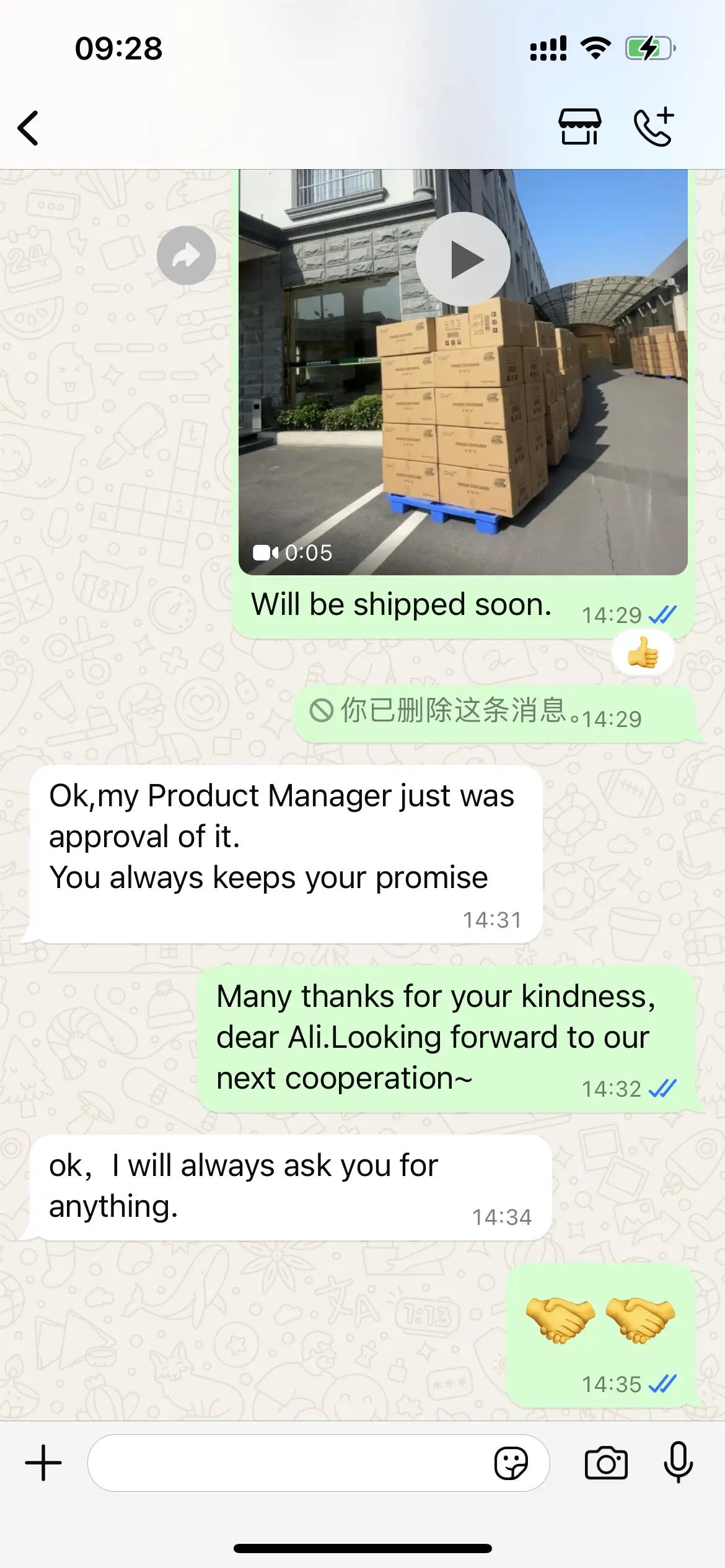
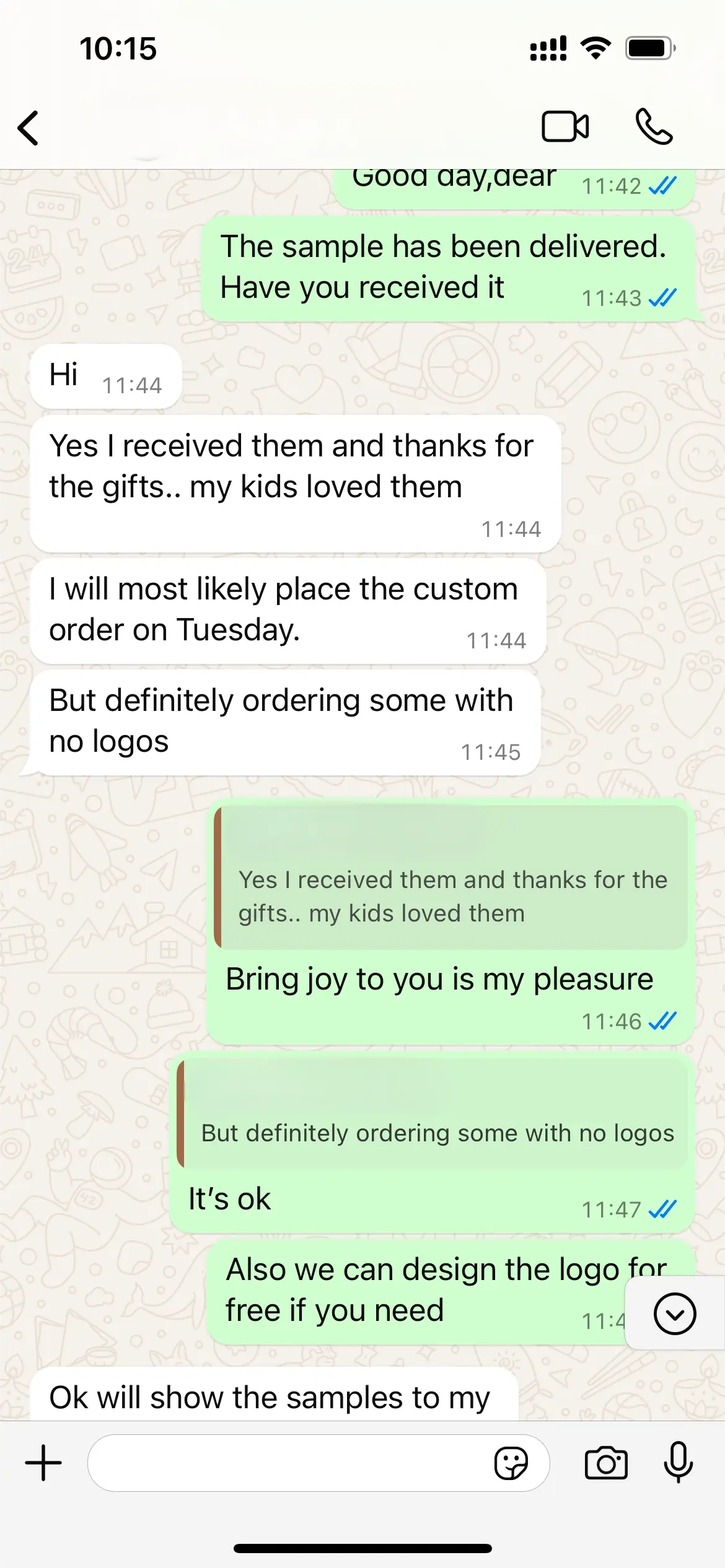
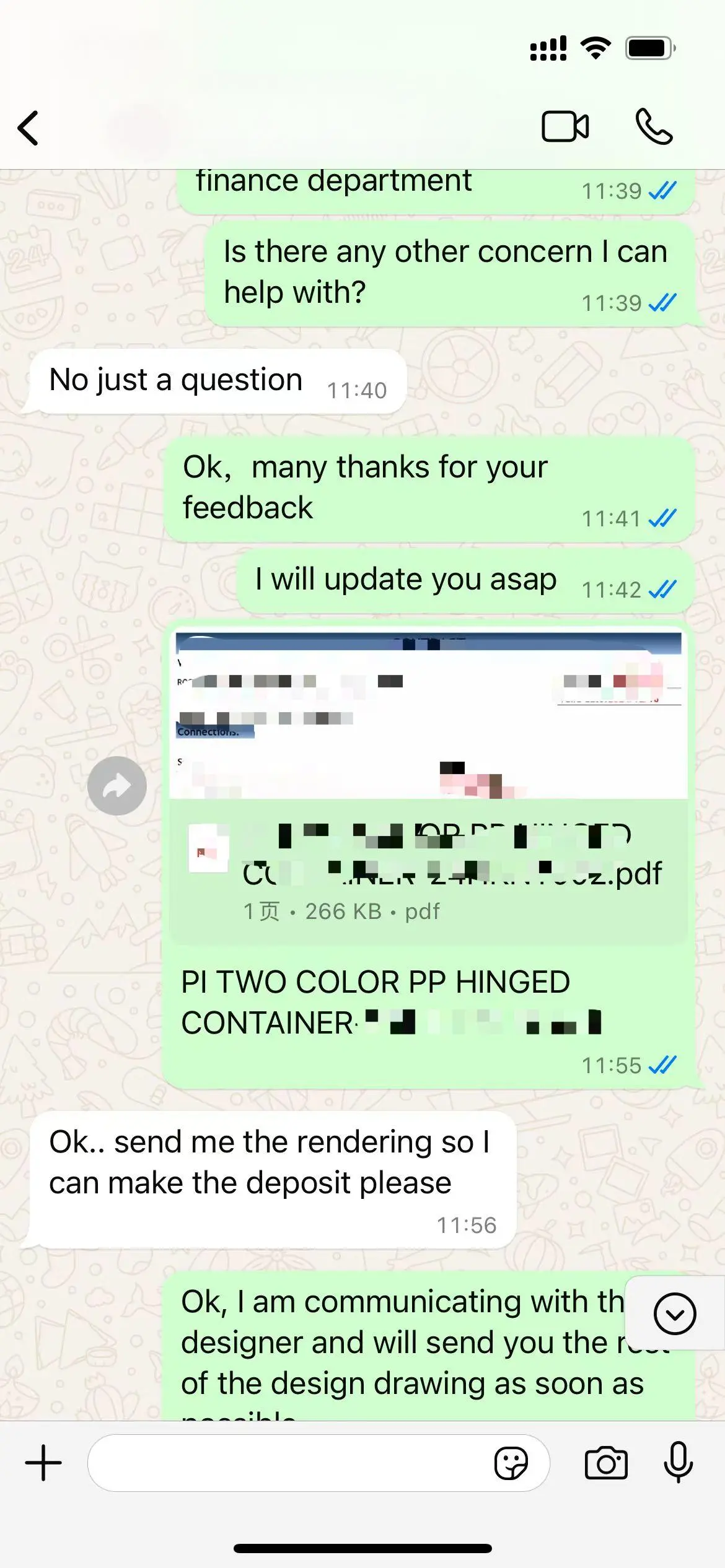
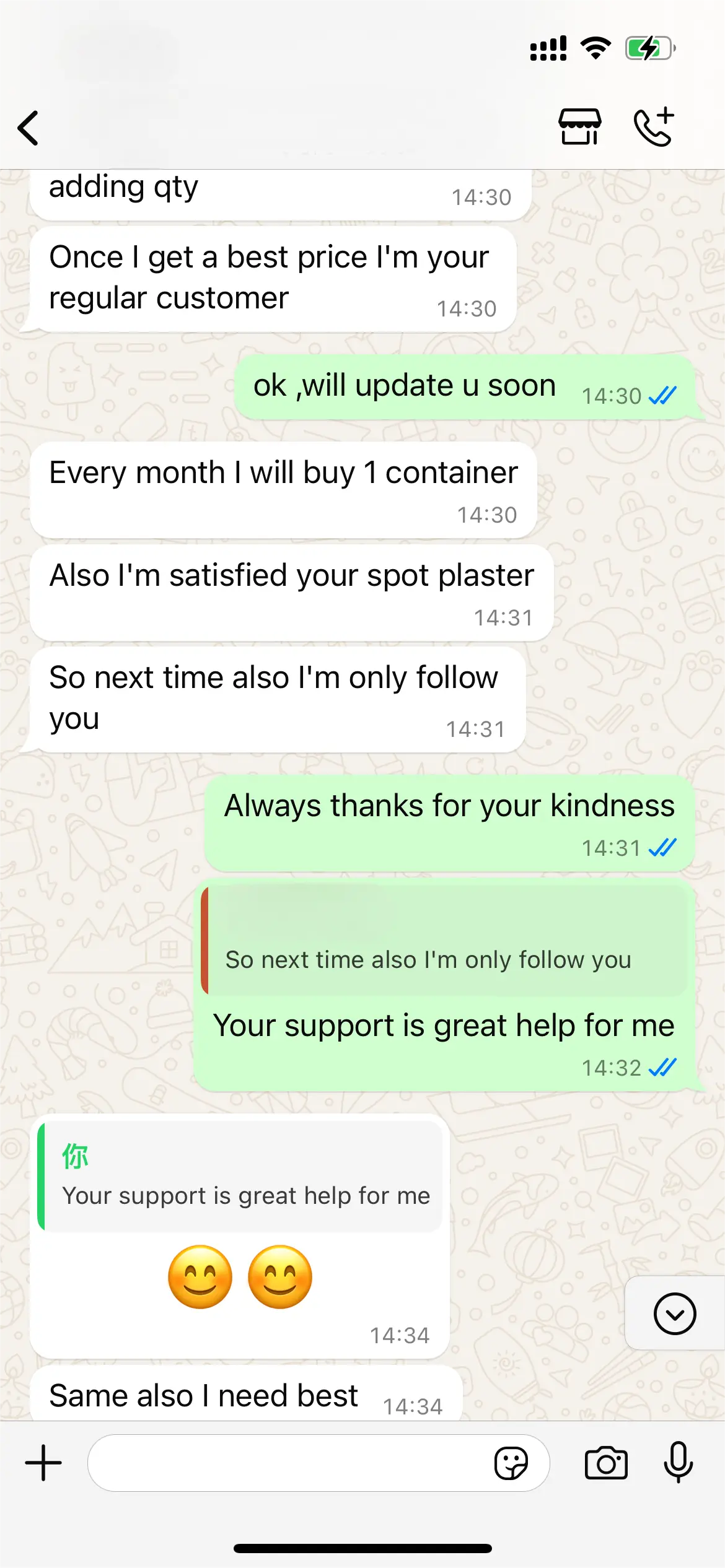
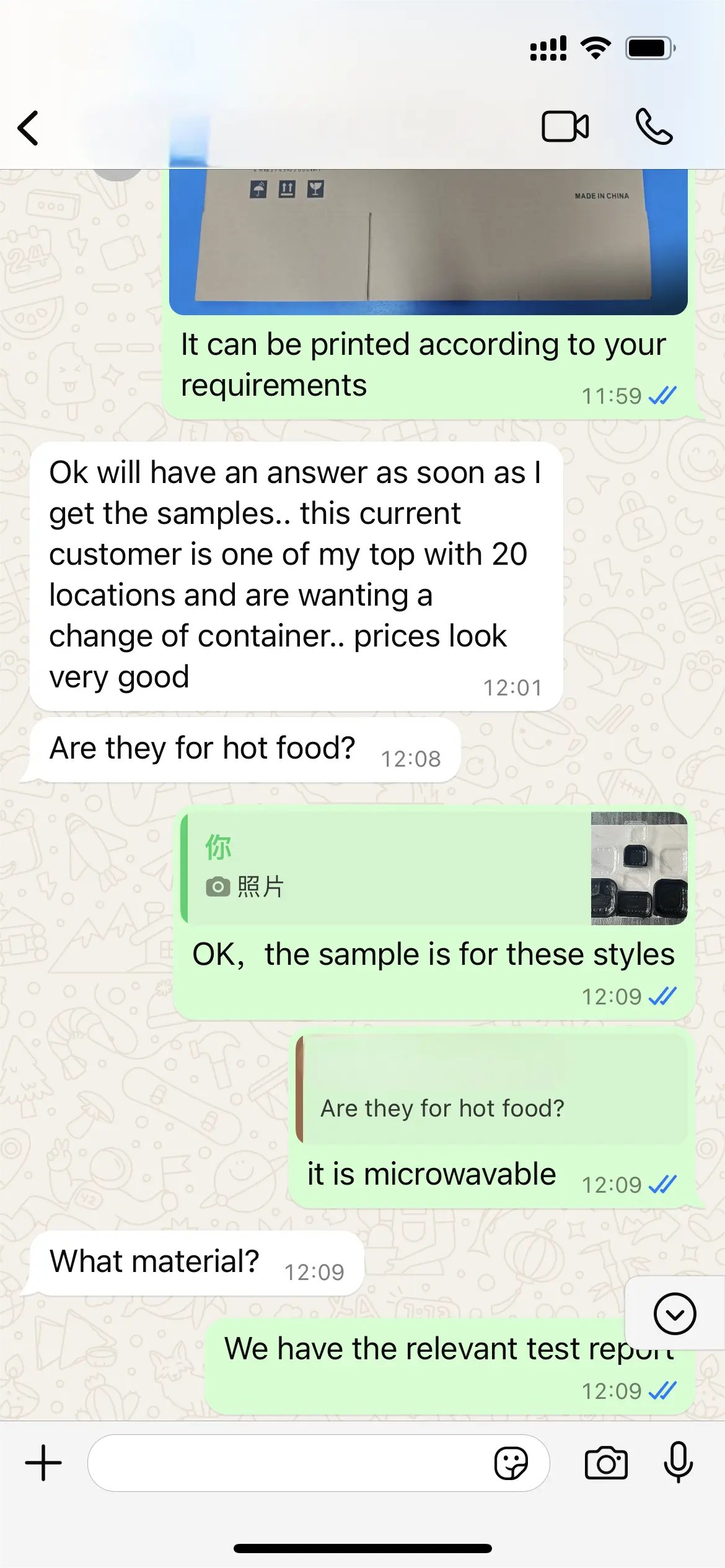
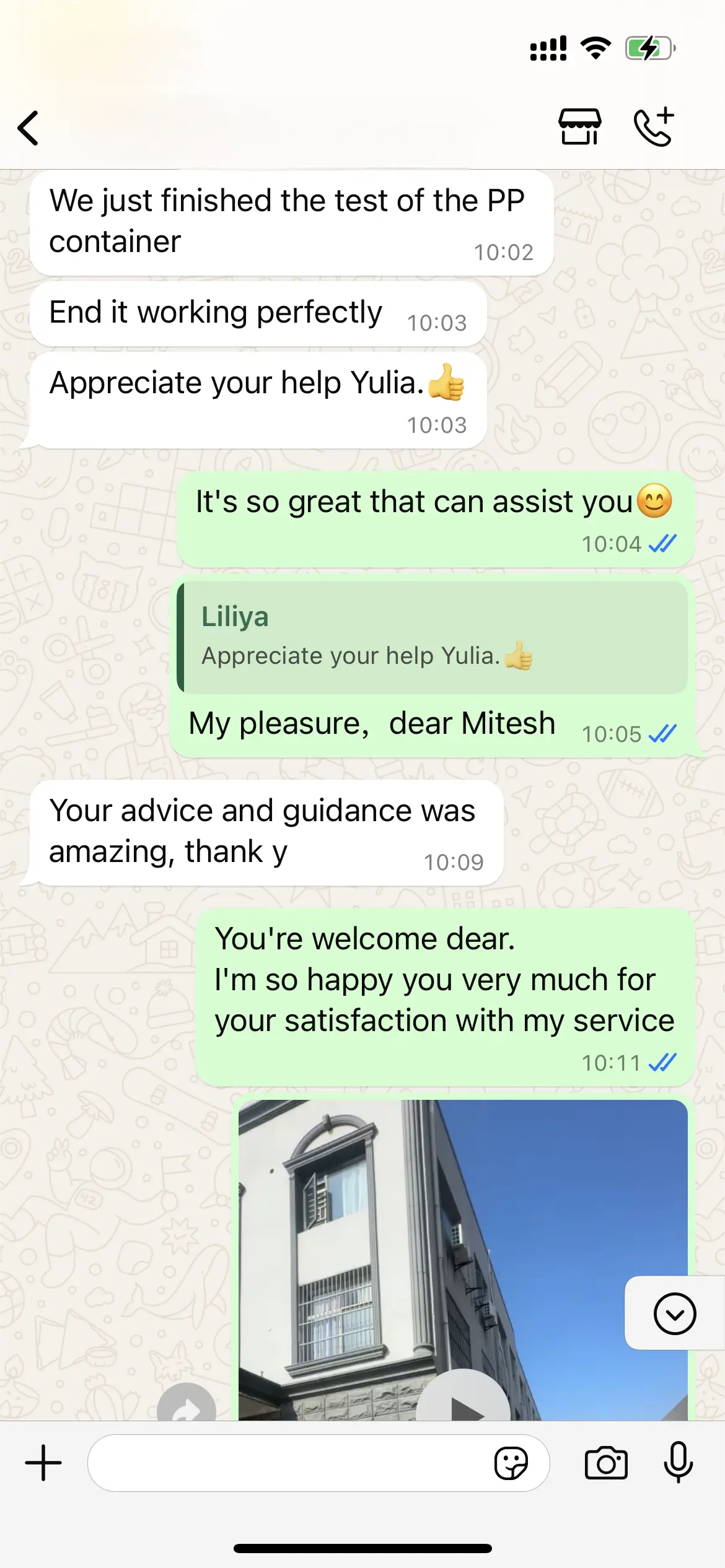
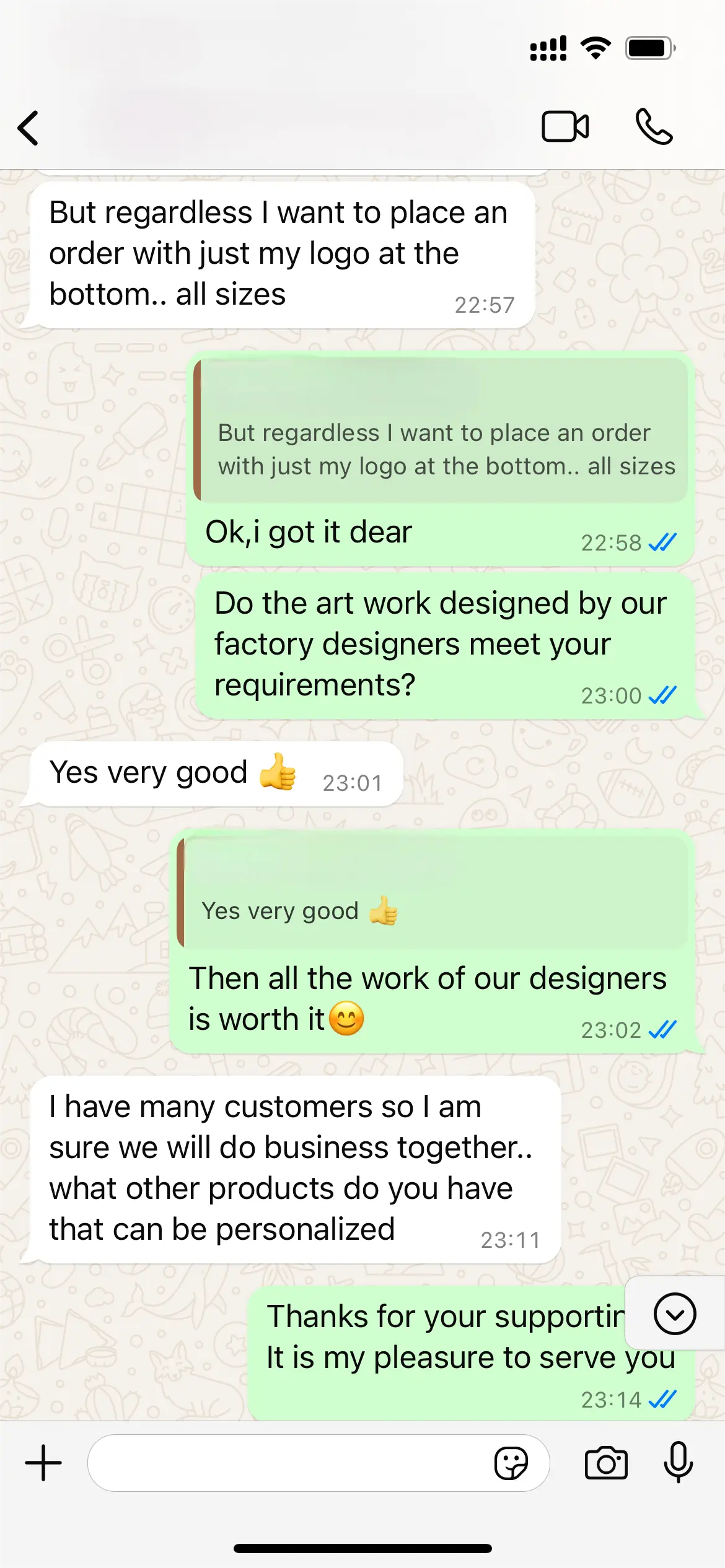
Learn about custom products
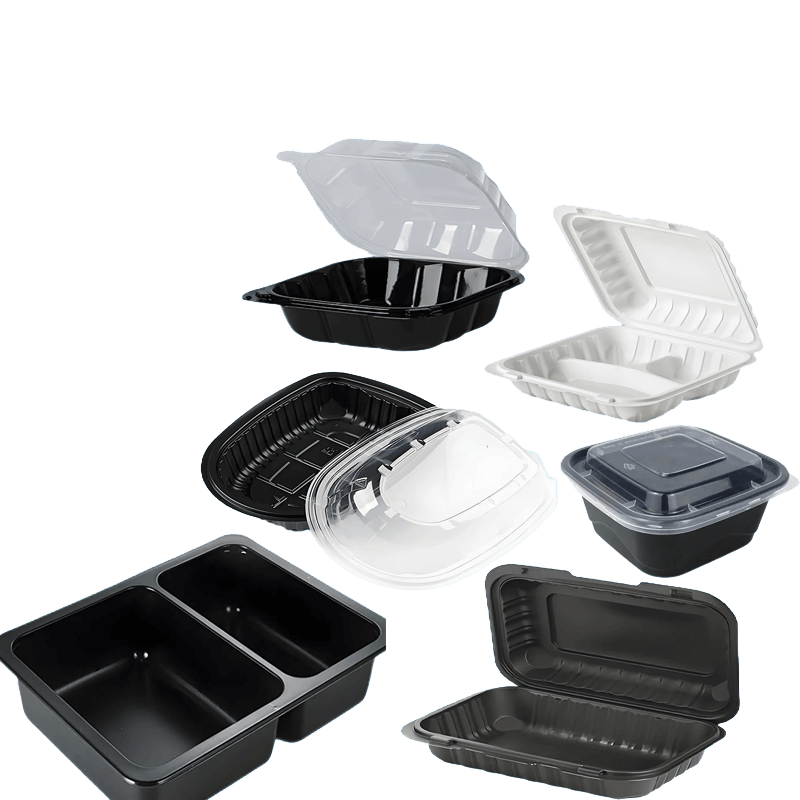
JHPKG can customize products according to the specific needs of customers, whether it is size, color or functional adjustment, can respond flexibly, further enhance customer satisfaction and loyalty.
Location
CENTURT AVENUE,PENGCHANG TOWN,
XIANTAO CITY, HUBEI, CHINA